


Pasture seeds are a crucial industry that underpins productive and profitable animal production (i.e. meat, milk and wool production). Australian pasture seed is predominately grown in South Australia, but key growing areas span Tasmania, New South Wales, Victoria and the southern part of Western Australia. Australian pasture seed is exported across the world, with Europe and the USA key importers of lucerne and clover seed. Certified lucerne production makes up over 60% of the total levied temperate pasture seed produced.
Pest management will always remain a key priority for pasture seed growers, but with the shifting global headwinds and evolving markets, there is an even bigger priority to ensure the tools the growers have continue to serve them. Especially as pest occurrence and impact will only increase as the climate changes.
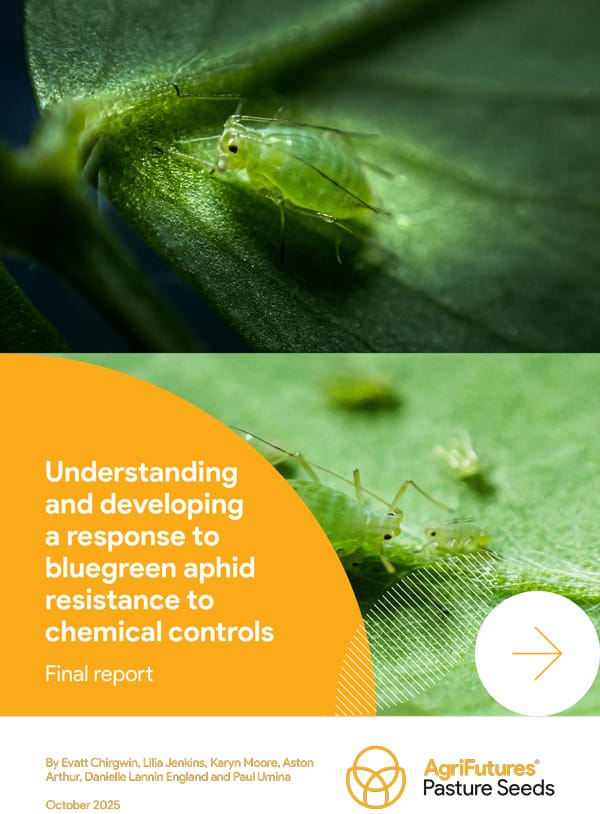
Previous work from Cesar identified that populations of insecticide-resistant bluegreen aphid (BGA) were appearing in South Australia and posed a significant threat to the pasture seed industry. BGA represent significant crop loss as they directly feed on the plant and spread harmful plant viruses. This project, done in conjunction with GRDC’s own investment in BGA insecticide resistance and management for the grain industry sought to:
- Gather information on the spread and variation of insecticide resistance in the field
- Generate baseline data on the biocontrol option for BGA
- Develop pest-management guidelines to support extension efforts by Lucerne Australia.
This project identified that regular monitoring for BGA remains crucial for its control as accurate identification of the species dictates the most effective chemical control. Effective chemical control and optimal application, in combination with rotating modes of action, also benefits natural predators of the BGA and reduces the risk of resistance.
BGA has yet to develop resistance to the newer insecticides like sulfoxaflor and lonicamid, meaning these should be used in regions with highly resistant populations (where organophosphates and pyrethroids should be avoided).
Agronomists and growers alike should observe the areas of highly resistant populations and incorporate the findings and recommendations from this report in the application of integrated pest management to manage the increasing occurrence of insecticide resistance.
This project was completed as part of the AgriFutures Pasture Seed Program, which aims to support a thriving and collaborative Australian certified temperate pasture seeds industry. For more information and resources, visit agrifutures.com.au/rural-industries/pasture-seeds/