


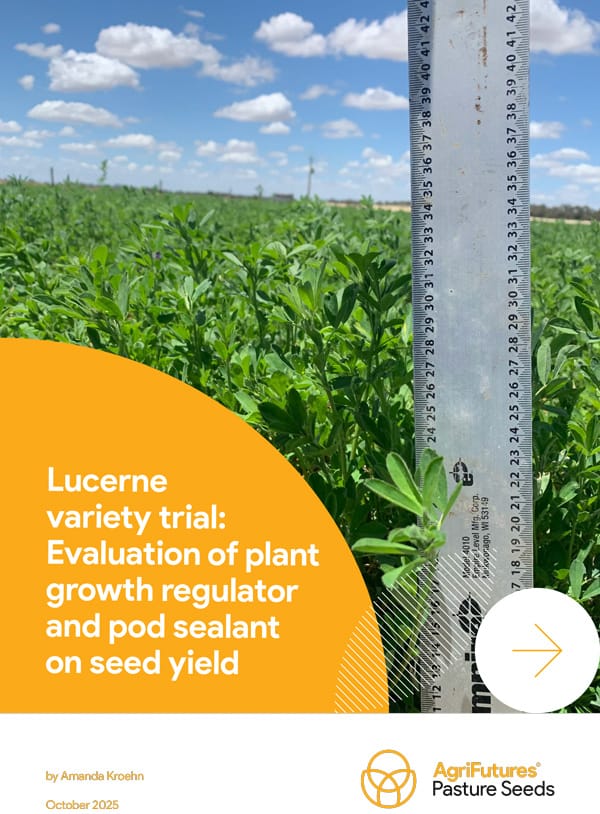
Lucerne seed production is a key component of Australia’s agricultural landscape, contributing an estimated $95 million annually and supporting more than 250 seed growers nationwide (Carter and Heywood 2008; Hudson 2017). As a critical input to pasture-based livestock systems domestically and abroad, lucerne seed (Medicago sativa) is predominantly produced under irrigated and dryland systems across SA, northern Victoria and southern NSW (Hudson 2017; Humphries et al. 2018). While lucerne seed production offers strong returns under favourable conditions, it remains a high-risk enterprise because of a range of agronomic, climatic and market challenges.
Maximising seed yield over the productive life of a lucerne stand (typically 5–7 years) is essential for grower profitability. However, factors such as uneven plant growth, poor flower retention, premature pod shattering, and pod shattering at harvest can significantly limit yield potential. In recent years, interest has grown in the use of plant growth regulators (PGRs) and pod sealants as potential tools to manipulate plant growth dynamics and to reduce yield losses due to pod shattering or environmental stress at maturity. While anecdotal evidence and overseas research suggest that PGRs might enhance seed set by improving flowering synchrony and reducing lodging, and that pod sealants may mitigate seed losses by limiting pod dehiscence, their combined impact on lucerne seed yield under Australian conditions remains poorly understood.
To address this knowledge gap, a two-year field trial in Keith, SA, evaluated the effects of a PGR and a pod sealant, applied individually and in comparison, to standard farmer practice on lucerne seed yield. The trial aimed to generate local data to support evidence-based decisions on the potential role of these inputs in lucerne seed production systems.
The objectives of the study were to:
- quantify the individual effects of a selected PGR and pod sealant on lucerne seed yield
- assess potential interactions with agronomic and environmental conditions, and
- provide preliminary recommendations for growers on the utility of these products as part of an integrated yield management strategy to maximise seed yield.